
Hair shedding is often the first thing people notice when their hair starts changing, but it is not the only sign that matters. Losing strands in the shower, on a pillow, or in a brush can feel alarming, especially when the scalp starts to look more visible.
“But what if the real concern is not just how much hair you are losing, but how full your hair still looks and feels?“
Hair density plays a major role in the overall appearance of your hair. It affects coverage, volume, scalp visibility, and how easy your hair is to style. For patients exploring PRP hair treatment and scalp therapy at KenshoDerm, understanding density can help shift the focus from simply reducing shedding to supporting stronger follicles, healthier scalp conditions, and fuller-looking hair over time.
Key Takeaways
- Hair density affects fullness and coverage.
- Shedding alone does not show everything.
- Scalp health supports stronger follicle function.
- PRP therapy encourages healthier hair growth.
- Early treatment helps protect visible density.
What Hair Density Really Means
Hair density refers to how many hairs grow in a specific area of the scalp. It is different from hair thickness, which describes the width of each individual strand.
A person can have fine hair but still have good density if many strands grow close together. Another person may have thick strands but low density if fewer follicles are actively producing hair. This is why density often affects the way hair looks more than shedding alone.
Density Vs Shedding
Shedding means hair strands are falling out. Some shedding is normal because hair naturally moves through growth, rest, and shedding phases.
Density loss is different. It means the scalp has less coverage because fewer hairs are growing in an area, or the hairs that grow back are finer than before. This can make hair look flat, thin, or sparse even when shedding slows down.
Why Coverage Matters
Coverage affects how visible the scalp looks through the hair. Low density often shows around the part line, temples, crown, or hairline.
This is why some people feel their hair looks thinner in bright lighting or photos. The number of strands on the brush may not tell the whole story. The way hair covers the scalp often gives a clearer picture of overall hair health.
Why Stopping Hair Shedding Is Only Part Of The Goal
Reducing excess shedding can be helpful, but it does not always restore fullness. A person may shed less and still feel their hair looks thin if density has already changed.
The bigger goal is to support healthier follicles and improve the scalp environment so hair can look stronger, fuller, and more balanced over time. This is where PRP hair treatment and scalp therapy may become part of a broader hair restoration plan.
Shedding usually gets attention because:
- It is easy to see in the shower
- It collects on pillows and clothing
- It appears in brushes and combs
- It can create sudden worry
- It feels like an obvious sign of hair loss
- It is easier to count than scalp coverage
Hair density, however, is what affects the final look. If regrowth is weak, slow, or uneven, the hair may still appear thin even after shedding improves.
How Hair Density Affects Overall Hair Appearance
Hair density influences how full your hair looks from every angle. It also affects how your hair behaves during styling, how much volume it holds, and how visible the scalp appears.
Many people first notice density changes before they fully understand what is happening. The hair may feel lighter, flatter, or harder to style. These signs can point to follicle changes, scalp issues, or early thinning patterns.
Wider Part Lines
A wider part line is one of the most common signs of reduced density. It happens when hair no longer covers the scalp as evenly as before.
This can be more noticeable after washing, under direct light, or when hair is pulled back. Women often notice this first along the center part, while men may see early changes near the front or crown.
Crown Visibility
The crown is another area where density loss can become visible. The scalp may show more clearly when the hair is wet, styled flat, or viewed from above.
Crown thinning can be frustrating because it is hard to see without a mirror or photo. Many patients only notice it after seeing pictures taken from behind or under bright lighting.
Lower Volume
Reduced density can make hair feel limp, soft, or less responsive to styling. Even if the hair is not falling out heavily, fewer active strands can reduce natural fullness.
This can also affect ponytail thickness, blowout volume, and how long a style holds. For many patients, lower volume is the first sign that their follicles may need more support.
Common Causes Of Reduced Hair Density
Hair density can change for several reasons. Some causes are genetic, while others may relate to hormones, scalp health, stress, aging, or lifestyle habits.
A consultation is important because hair thinning does not have one single cause. The right treatment plan depends on what is affecting the scalp and follicles.
Common factors linked with reduced density include:
- Genetics
- Hormonal changes
- Stress
- Aging
- Poor scalp health
- Scalp inflammation
- Nutritional deficiencies
- Certain medical conditions
- Postpartum changes
- Harsh hairstyles
- Heat or chemical damage
- Changes in the hair growth cycle
Not every person with thinning hair has the same pattern. Some experience gradual density loss over years. Others notice a more sudden change after stress, illness, hormonal shifts, or major life events.
The Role Of Scalp Health In Hair Density
Healthy hair growth starts with a healthy scalp. The scalp supports the follicles, blood supply, oil balance, and skin environment that influence hair quality.
When the scalp is irritated, inflamed, or poorly balanced, follicles may not function as well as they should. This can affect the strength, consistency, and appearance of new growth.
Follicle Support
Hair follicles are living structures beneath the skin. They move through cycles of growth, transition, rest, and shedding.
When follicles become weaker or less active, the hair they produce may become finer. Over time, this can reduce visible density and make the scalp appear more exposed.
Scalp Circulation
Good scalp circulation helps deliver oxygen and nutrients to the tissue around the follicles. While circulation alone does not solve every type of hair loss, it is part of a healthy growth environment.
PRP therapy is often used to support this environment by delivering concentrated platelets from the patient’s own blood into targeted scalp areas.
Inflammation Control
Scalp irritation can affect comfort and hair quality. Redness, itching, flaking, and sensitivity may also make hair care more difficult.
A healthier scalp environment can help support better follicle function. That is why scalp therapy should focus on more than the visible strands.
How PRP Hair Treatment Supports Hair Density
PRP stands for platelet-rich plasma. During treatment, a small sample of the patient’s blood is drawn and processed to concentrate platelets, which contain growth factors involved in healing and tissue repair.
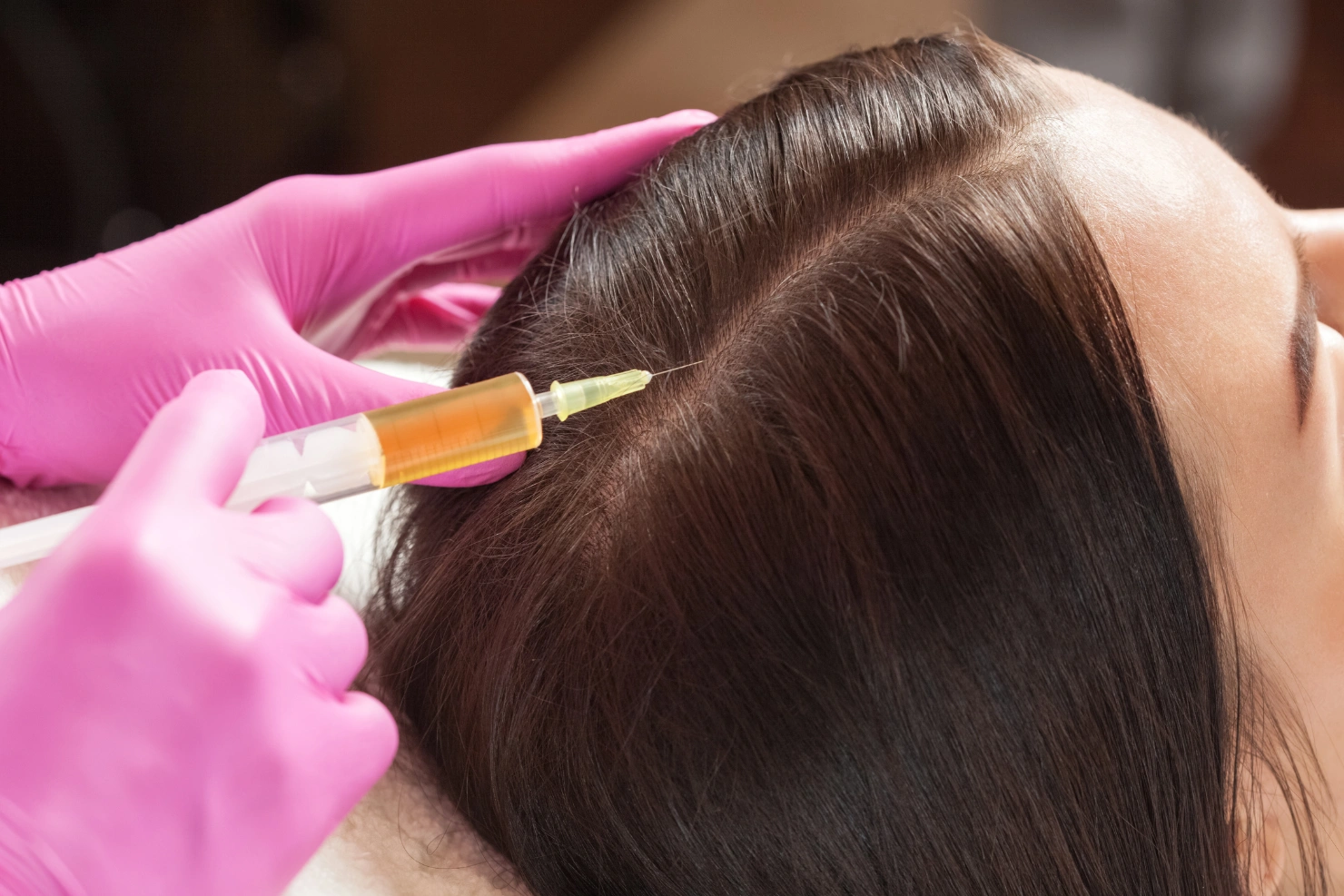
For hair restoration, PRP is placed into targeted areas of the scalp. The goal is to support follicle activity, improve the scalp environment, and encourage healthier hair growth. Results vary by patient, and PRP is usually recommended as a treatment series rather than a one-time visit.
| Hair Concern | Why It Matters | How PRP May Help |
|---|---|---|
| Weak follicles | Hair may grow finer over time | Supports follicle activity |
| Visible scalp | Lower density affects coverage | Encourages healthier growth |
| Slow regrowth | Shed strands may not be replaced quickly | Supports the growth cycle |
| Scalp stress | Poor scalp conditions can affect follicles | Helps improve the scalp environment |
| Early thinning | Density loss may progress if ignored | Provides non-surgical follicle support |
PRP is often considered for people with early thinning, pattern-related hair loss, or reduced density. It is not a guaranteed cure, and it may not be right for every type of hair loss. A provider should evaluate the scalp, hair history, and goals before recommending treatment.
What To Expect During PRP Scalp Therapy
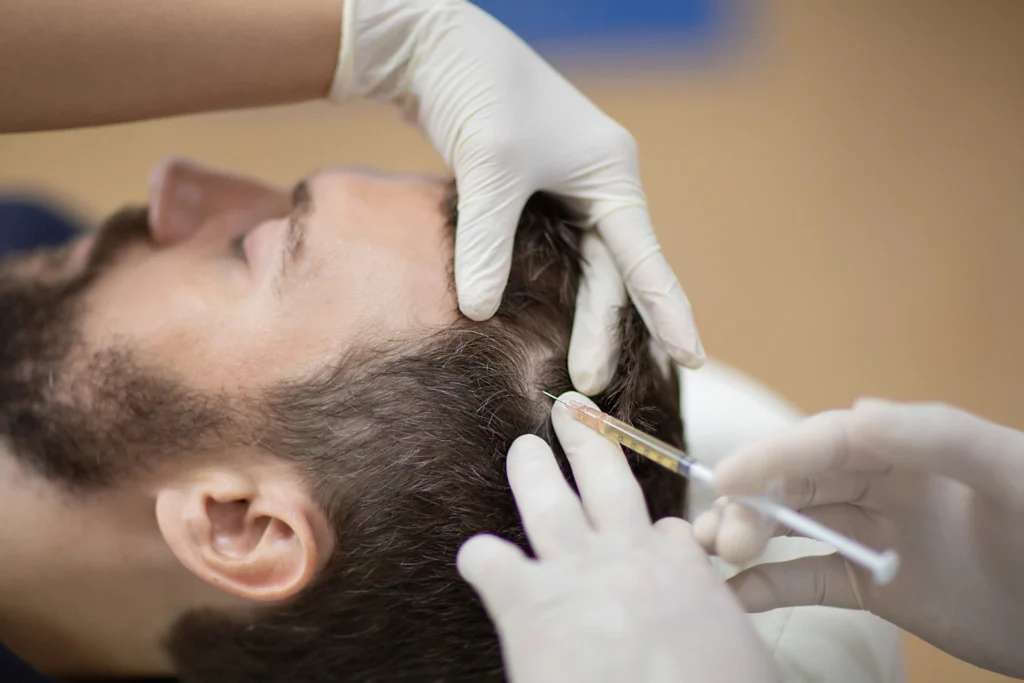
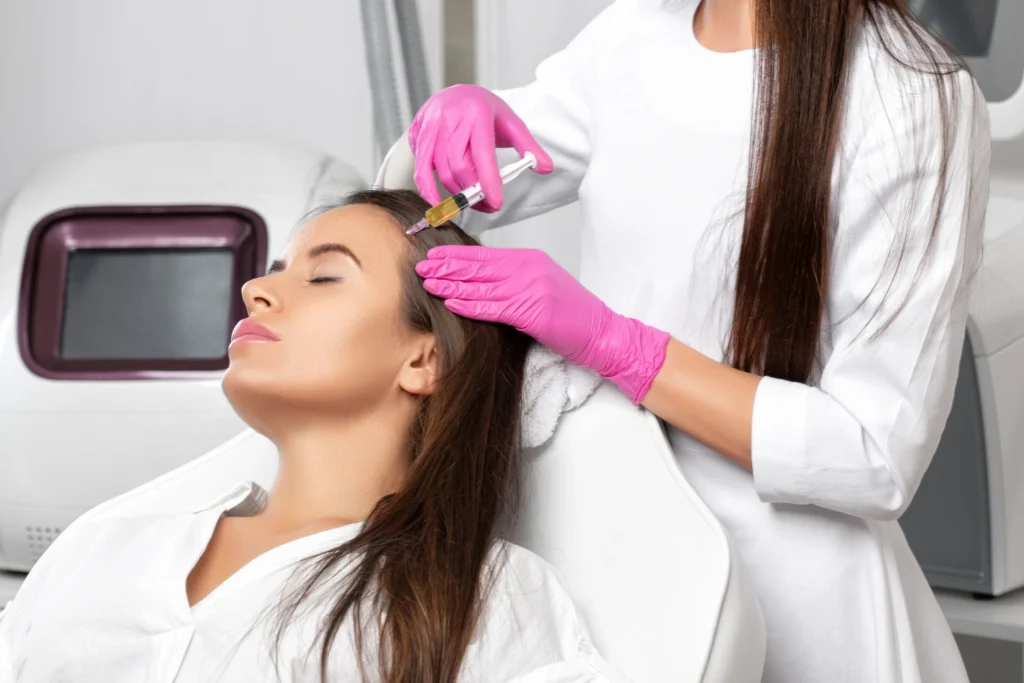
PRP scalp therapy is a non-surgical treatment performed in-office. Most patients can return to regular daily activities after the appointment, though mild tenderness, redness, or sensitivity may occur.
At KenshoDerm, the treatment starts with a consultation to understand your hair concerns, scalp condition, and goals. From there, a treatment plan can be discussed based on your needs.
Blood Draw
A small blood sample is collected, similar to a routine lab draw. This sample provides the platelets used for the treatment.
Because PRP comes from your own blood, it uses your body’s natural healing components. This makes it different from topical products that are applied only to the surface of the scalp.
Plasma Processing
The blood sample is processed to separate and concentrate the platelet-rich plasma. This step helps prepare the PRP for placement into targeted scalp areas.
The concentrated plasma contains platelets and growth factors that are involved in tissue repair and healing response.
Scalp Treatment
The PRP is placed into areas of the scalp where thinning, reduced density, or follicle weakening is present. The provider may focus on the crown, hairline, part line, or other areas of concern.
Some patients may need a series of treatments spaced over time. Maintenance sessions may also be recommended depending on the patient’s response and long-term goals.
Who May Benefit From PRP Hair And Scalp Therapy
PRP may be helpful for patients who are starting to notice changes in density, volume, or scalp visibility. It is often considered for early hair thinning because follicles may respond better when they are still active.
A consultation is the best way to determine whether PRP fits your needs. Hair loss can have several causes, and some conditions may require medical evaluation or a different treatment approach.
Patients who may consider PRP include:
- People with early hair thinning
- Men with pattern-related thinning
- Women with reduced volume
- Patients with visible scalp areas
- People with weaker hair growth
- Patients seeking non-surgical support
- People focused on scalp health
- Patients wanting a natural treatment option
PRP may also be combined with other provider-recommended hair support strategies. The best plan depends on the cause of thinning, the condition of the scalp, and how long density changes have been present.
Why Timing Matters For Better Hair Density Support
Hair density changes are often easier to address when they are caught early. Once follicles become inactive for a long time, treatment may become more limited.
This is why patients should not wait until thinning becomes severe before seeking guidance. Early evaluation can help identify changes in the scalp and hair growth pattern before the loss becomes more noticeable.
Early Changes
Early signs may include a wider part, reduced ponytail thickness, flatter styling, more visible scalp, or thinning near the crown. These changes can happen slowly, so they are easy to overlook.
Monthly photos can help you see changes more clearly than daily mirror checks. Consistent lighting and the same hair part can make tracking more accurate.
Treatment Planning
PRP hair treatment usually works best as part of a plan. Hair growth takes time because follicles follow a natural cycle.
A provider may recommend multiple sessions to support the scalp over several months. Progress should be measured by density, coverage, scalp visibility, and hair quality, not just by daily shedding.
Pro Tip
Track hair density with monthly photos instead of judging progress by daily shedding. Use the same lighting, angle, hairstyle, and part line each time. This makes it easier to see real changes in coverage, crown visibility, and overall fullness over time.
When To Schedule A Consultation
A consultation is a smart step if your hair looks thinner, your part line appears wider, or your scalp is more visible than before. It is also helpful if your shedding has slowed but your hair still looks less full.
KenshoDerm offers PRP hair treatment and scalp therapy in Arlington, VA for patients who want non-surgical support for hair growth and scalp health. The goal is to understand your concerns, evaluate your scalp, and recommend a treatment plan that fits your hair goals.
You may want to book a consultation if you notice:
- Thinner-looking hair
- Reduced volume
- More visible scalp
- A wider part line
- Crown thinning
- Slow regrowth
- Weaker hair texture
- Ongoing scalp concerns
The sooner you understand what is happening, the easier it is to choose the right next step.
Conclusion
Hair shedding matters, but it is only one part of the bigger picture. Hair density is what affects fullness, scalp coverage, volume, and confidence.
PRP hair treatment and scalp therapy focus on supporting the scalp and follicles, not just reducing the number of strands you see falling out. For patients in Arlington, VA, KenshoDerm offers a non-surgical option that may help improve the scalp environment and support healthier-looking hair over time.
If your hair looks thinner, flatter, or less dense than before, schedule a consultation with KenshoDerm to learn whether PRP Hair and Scalp Therapy is right for you.